





Projects
Going with the flow at Pūerua River
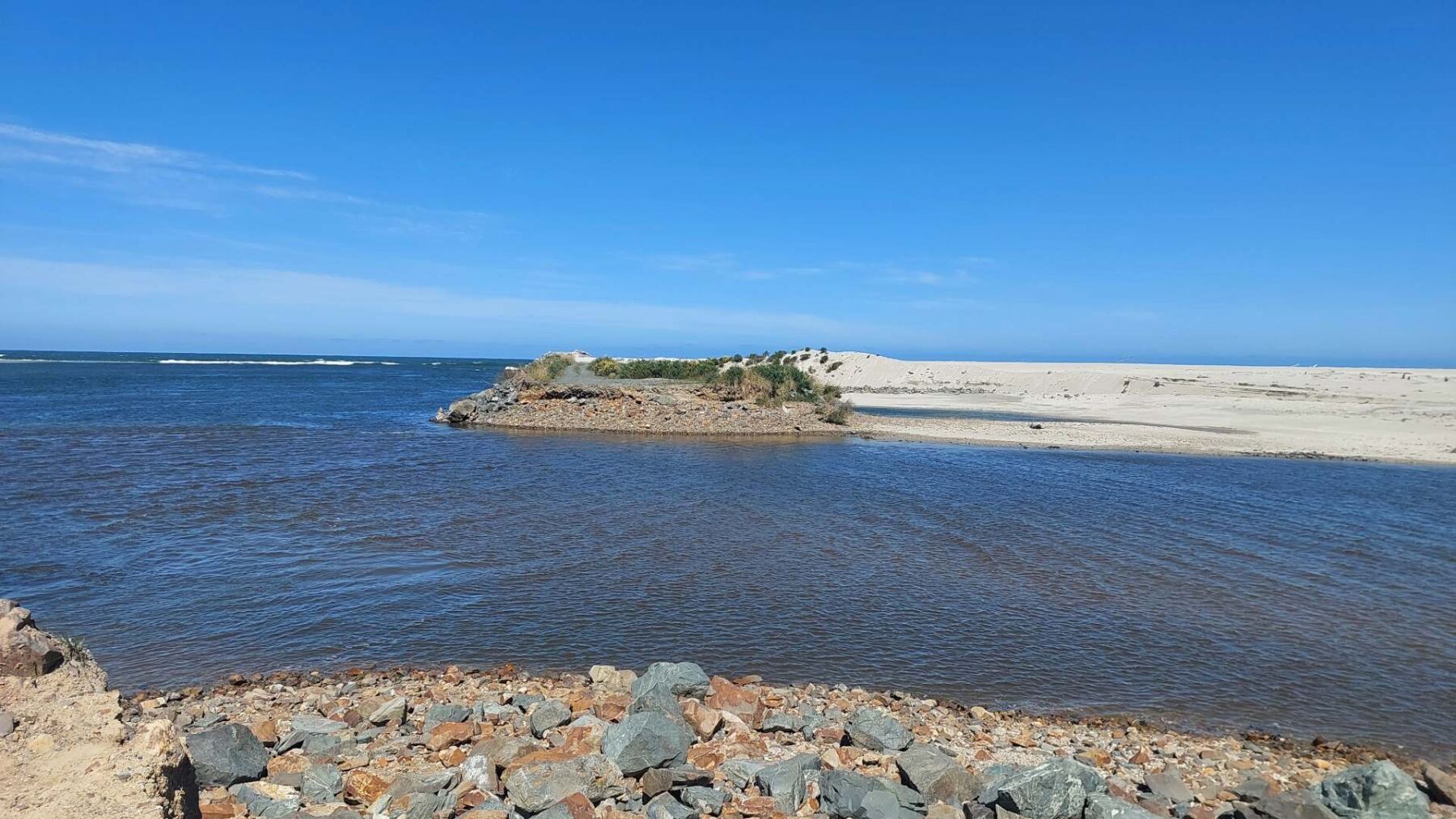
Following damage caused by the October 2024 floods, the SouthRoads crew were engaged to repair a section of the training line located on the Koau Branch of the Clutha River, New Zealand’s second longest river and a critical part of the region’s flood and drainage network.
Working closely with Otago Regional Council and project engineers, collaboration was key to forming a methodology that balanced complex engineering requirements with the challenges of a highly-exposed coastal environment. With changing conditions ranging from summer heat through to winter frosts, large tidal movements, swell and sea conditions, and even the presence of marine wildlife, careful planning was essential at every stage of the project. A key engineering challenge was developing a long-term solution to support pipes that sit almost fully submerged at design level. Each pipe carries approximately 24 tonnes of buoyancy, requiring specially designed anchoring and restraint systems to ensure stability under all conditions.
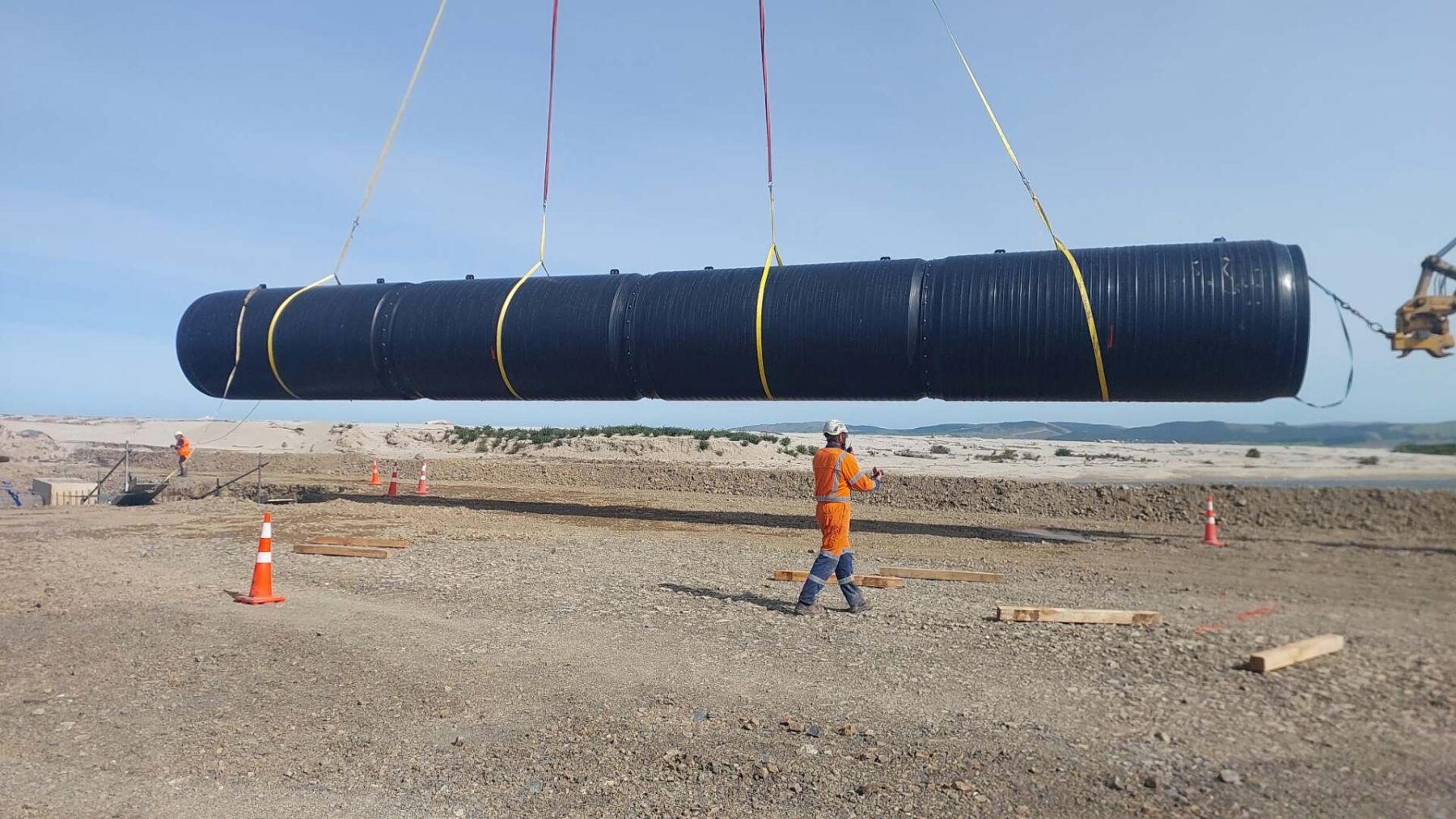
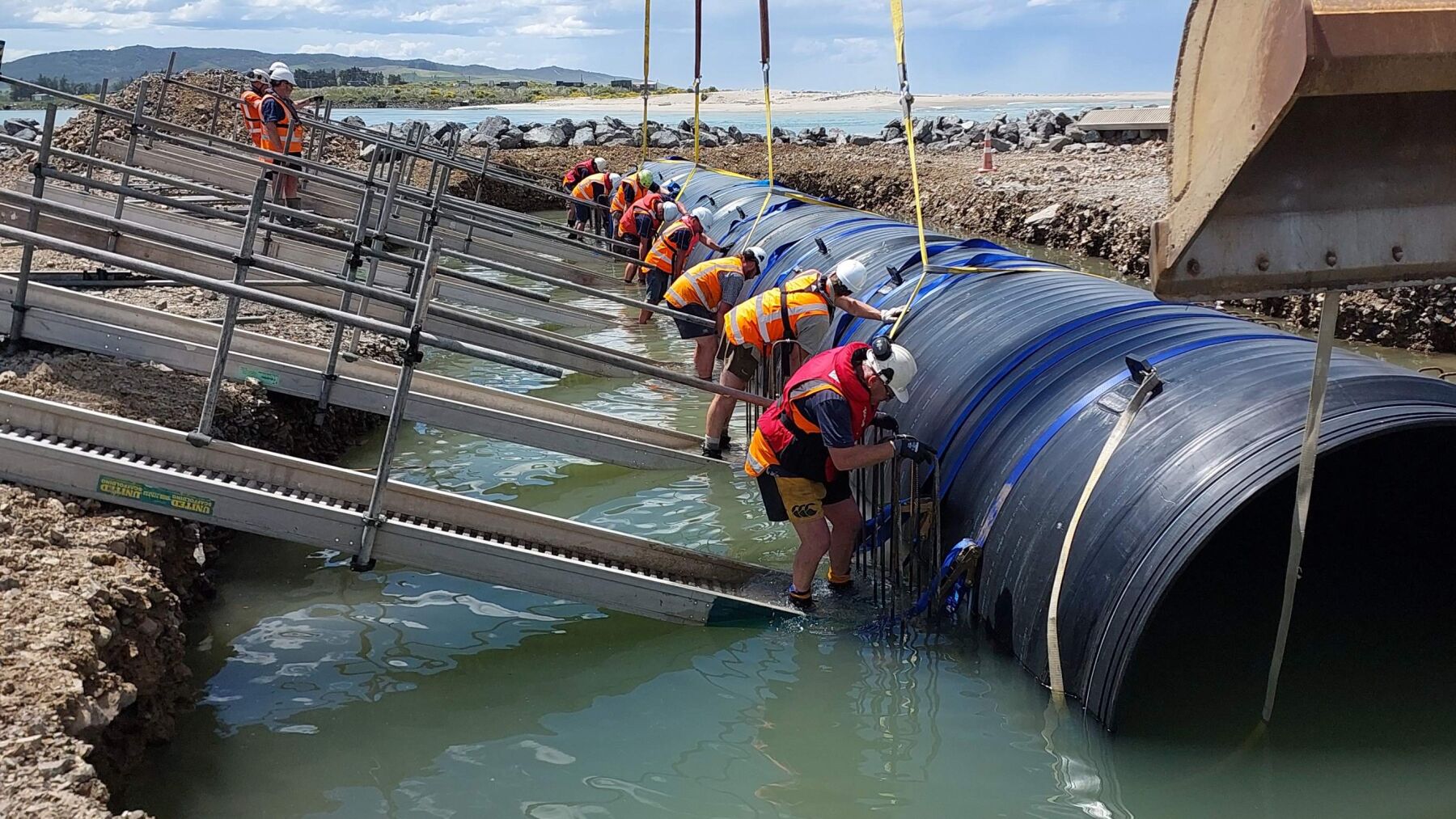
The scope of works was significant. Approximately 16,000 tonnes of rock, boulders, and protection materials were carted and placed to reinstate the training line. Once reinstatement was complete, stage two of the project commenced with the installation of six 24 metre long, 2.5 metre diameter HDPE pipes, enabling the controlled flow of the Pūerua River into the Clutha River. To put the size into perspective, each pipe is equivalent to approximately five utes parked end to end, with space to walk comfortably around them. In May 2025, approximately 19,000 tonnes of rock and boulders were placed to create stable access along the top of the training line, allowing excavators and a crane to safely carry out installation works. During the latter half of 2025, 48 10-tonne U-shaped anchors were designed and fabricated, and additional rock protection was brought on-site to counteract ongoing swell conditions.
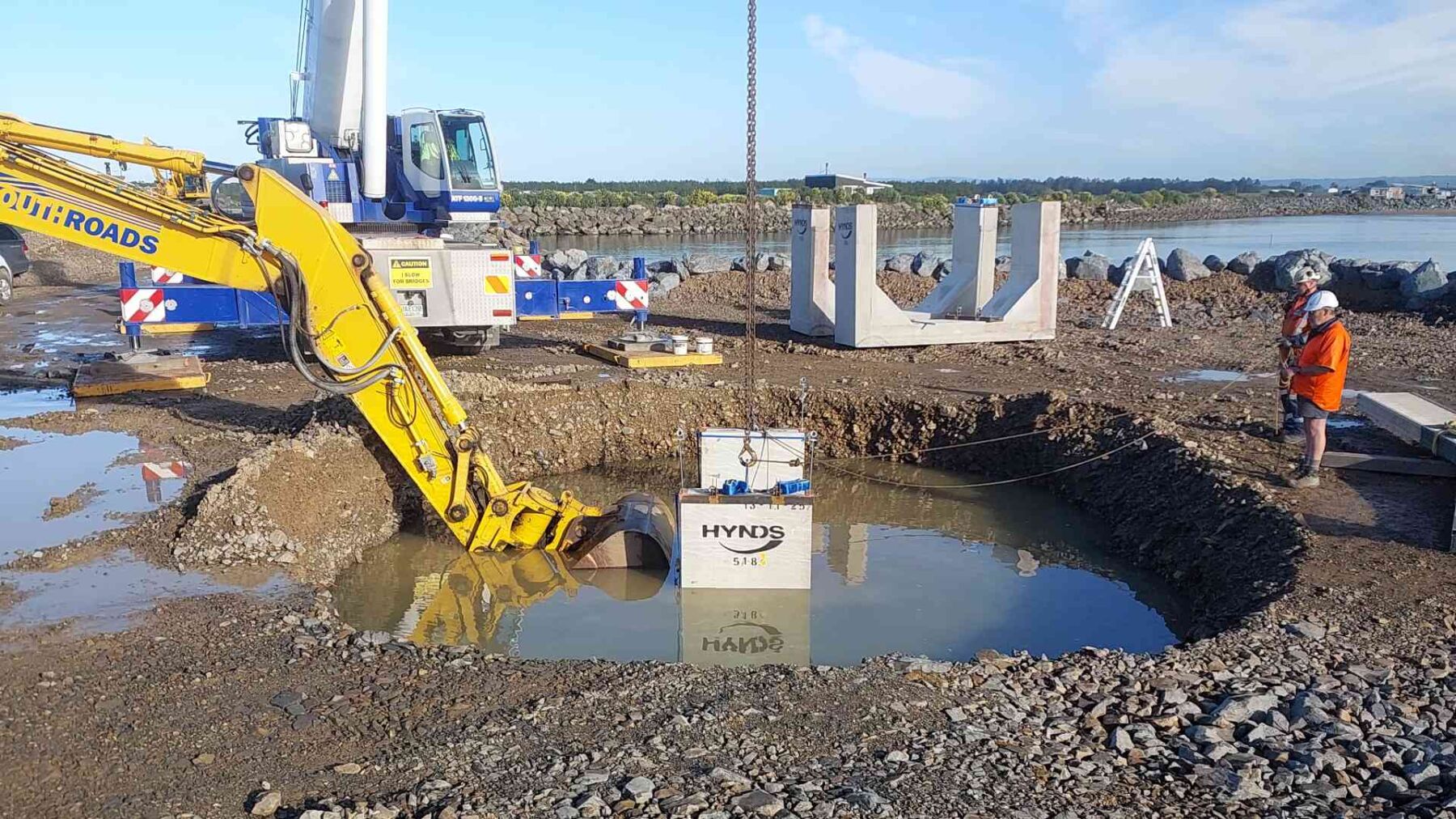
By November 2025, the team were ready to install the first pipe. Using GPS guided plant and under the supervision of an in-house surveyor, a trench was excavated through the training line and anchors were installed, eight per pipe, with pinpoint accuracy. Each pipe was then carefully lowered into position, secured using strops, and locked in place with four in situ poured concrete caps. As of mid April 2026, three of the six pipes have been successfully installed and secured to design. Each installation takes approximately three to four weeks, depending on weather and tidal conditions. The SouthRoads team is now focused on completing and commissioning the remaining three pipes ahead of winter, continuing to deliver a resilient, long-term solution for the region.